I’ll be honest: feet are not something I thought about much for most of the year. Then sandal season arrives, and suddenly there they are — on full display, in all their dry, rough-edged glory.
I’m not particularly vain about it. But there’s something deeply satisfying about putting a bit of effort into your feet in spring and watching them actually respond. Soft, smooth, comfortable feet aren’t just about appearances — they’re genuinely better for you. Dry, cracked skin can become painful, and left too long, cracked heels in particular can develop into a real problem. Read our guide to corn removal and cracked heels.
The good news is that getting feet into good condition doesn’t require expensive treatments or a lot of time. It requires the right tools, done consistently.
Here’s what works.
Why Do Feet Get Dry and Hard?
Feet have no sebaceous (oil-producing) glands — unlike the skin on the rest of your body, they can’t moisturise themselves. They rely entirely on external moisture, and they’re subject to constant friction and pressure that encourages hard skin to build up.
Add in dry indoor heating in winter, synthetic socks and footwear, and the general neglect most of us subject our feet to, and it’s not surprising that they end up rough by the time warmer weather arrives.
Hard skin (callus) forms as a protective response to pressure and friction — it’s the body doing its job, but too much of it becomes uncomfortable and unsightly. Dry, flaky skin is a moisture issue. Cracked heels are usually a combination of both: hard skin that’s dried out and split under the pressure of walking.
All three respond well to the same basic approach: remove the excess, soften what remains, and keep it moisturised going forward.
Step 1 — Soak
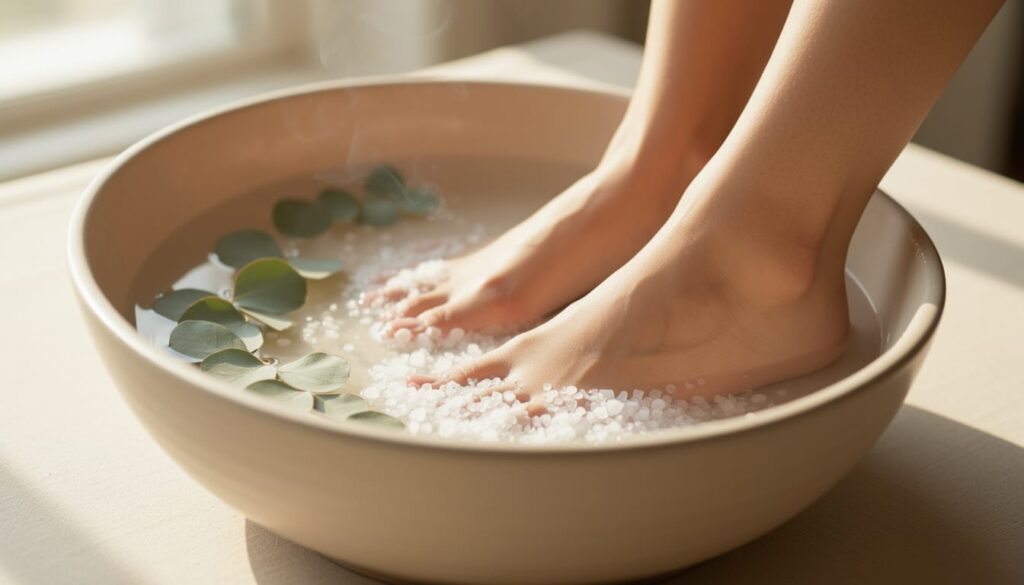
A good soak softens hard skin and makes everything that follows significantly more effective. You don’t need anything elaborate — warm (not hot) water for 10–15 minutes is enough. Adding a handful of Epsom salts or a few drops of tea tree oil is optional but pleasant.
Avoid soaking for too long or in very hot water — it can strip the skin of what natural moisture it has. And if you have diabetes or any condition affecting circulation or sensation in your feet, skip soaking altogether and speak to a podiatrist before attempting any home foot care. Read our guide to diabetic foot care.
Step 2 — Exfoliate
This is where the hard skin actually gets removed, and having the right tool matters.
Foot files are the most effective option for significant hard skin build-up. A good-quality foot file — used on damp skin after soaking — removes callus efficiently without the risk of over-filing that comes with blades or rasps. Look for a double-sided option with coarse and fine grades: coarse for the initial removal, fine for smoothing.
Pumice stones are gentler and better suited to maintenance once the initial build-up has been addressed. They work well on heels and the ball of the foot but take longer than a good file on significant hard skin.
Electric foot files are worth considering if manual filing feels like hard work or if you have significant build-up to deal with. They’re faster, require less effort, and the results tend to be more even. Some people find them easier to use on their own feet than bending over with a manual file.
A note on blades and corn plasters: Corn plasters (the salicylic acid type) and cheese-grater-style rasps are best avoided for general use at home. Acid-based products can damage healthy skin surrounding the hard patch, and sharp blades are easy to overuse. A podiatrist has the tools and training to use these safely — for home use, stick to files and pumice. Read our guide to corn removal.
Step 3 — Moisturise
This is the step most people either skip or do half-heartedly, and it’s the one that makes the most difference to how long the results last.
Apply a dedicated foot cream while the skin is still slightly warm from soaking — it absorbs better and works faster. Regular body lotion is better than nothing, but a foot-specific cream with a higher concentration of active ingredients (urea, lactic acid, or shea butter) makes a significantly more noticeable difference.
Urea is the ingredient to look for. It’s a humectant — it draws moisture into the skin and also gently breaks down very dry, thickened skin over time. Creams with 10–25% urea are highly effective for dry, rough feet and are available over the counter without a prescription.
Apply to the whole foot, avoiding between the toes (excess moisture between the toes can encourage fungal growth). Put on a pair of cotton socks after applying if you can — it helps the cream absorb rather than transferring onto the floor.
Keeping Feet Soft — The Maintenance Routine
Getting feet into good condition is satisfying. Keeping them there is simpler than the initial effort.
Daily:
- Wash and dry feet properly, including between the toes
- Apply foot cream before bed — even a minute of this each night makes a meaningful cumulative difference
- Wear natural-fibre socks where possible
Weekly:
- A brief soak and light file to stay on top of any hard skin before it builds up again
- Check heels for early signs of cracking — caught early, this takes minutes to sort; left too long, it becomes a much bigger job
Seasonally:
- A more thorough treatment session at the start of sandal season — and again at the end of summer before enclosed shoes return
- Rotate footwear to allow shoes to dry fully between wears, reducing the damp environment that contributes to skin problems
Cracked Heels — When to Get Help
Mild heel dryness responds well to the routine above. But cracked heels that have split deeply, are bleeding or painful, or aren’t improving with consistent moisturising warrant professional attention.
A podiatrist can safely debride the hard skin surrounding the crack, apply appropriate dressings if needed, and give advice on whether an underlying factor — footwear, gait, skin condition — is contributing. Leaving deep heel fissures untreated risks infection, particularly for anyone with diabetes or reduced sensation. Find a podiatrist near you.
Product Round-Up — What to Buy
For a complete home foot care kit, these are the basics worth having:
- A good-quality double-sided foot file — coarse and fine grades
- A urea-based foot cream (10–25% urea for noticeably dry or rough skin)
- Epsom salts for soaking (optional but pleasant)
- A pair of cotton socks designated for after-cream application
- Antifungal powder if you’re prone to sweating or fungal issues. Read our guide to sweaty feet.
You don’t need a lot else. The results from consistent, simple care outperform a cabinet full of products used sporadically.
Frequently Asked Questions
How long does it take to get soft feet?
With consistent effort — soaking, filing, and moisturising every few days — most people notice a significant improvement within two to three weeks. Maintenance thereafter is much less intensive than the initial work.
Can I get soft feet without a pedicure?
Absolutely. A professional pedicure is enjoyable and the results are satisfying, but everything a pedicure achieves can be replicated at home with the right tools and a bit of time. The main thing a professional adds is speed and the ability to reach angles that are awkward to do yourself.
Is it safe to file feet every day?
Daily filing isn’t necessary and can irritate healthy skin. Once or twice a week is plenty for maintenance; more intensive filing during an initial treatment phase should be done carefully and stopped if the skin feels raw or sensitive.
Why do my heels crack every year despite moisturising?
Recurring cracked heels are often related to footwear — open-backed shoes and sandals allow the heel pad to spread sideways, increasing the pressure that causes cracking. Wearing sandals with a supportive heel strap rather than completely open backs, and continuing to moisturise through summer rather than stopping once feet look smooth, usually helps significantly.
What’s the difference between hard skin and a corn?
Hard skin (callus) is a diffuse area of thickened skin, usually on the heel or ball of the foot. A corn is a concentrated, focused area of hard skin with a central core, usually caused by a specific pressure point. Corns are typically more painful when pressed. Read our guide to corn removal.
This page contains affiliate links. If you buy through these links, I may earn a small commission — at no extra cost to you. It’s what keeps this site free to use.
The information on this page is for general guidance only and does not constitute medical advice. If you are unsure about a foot condition, please consult a qualified podiatrist or GP.