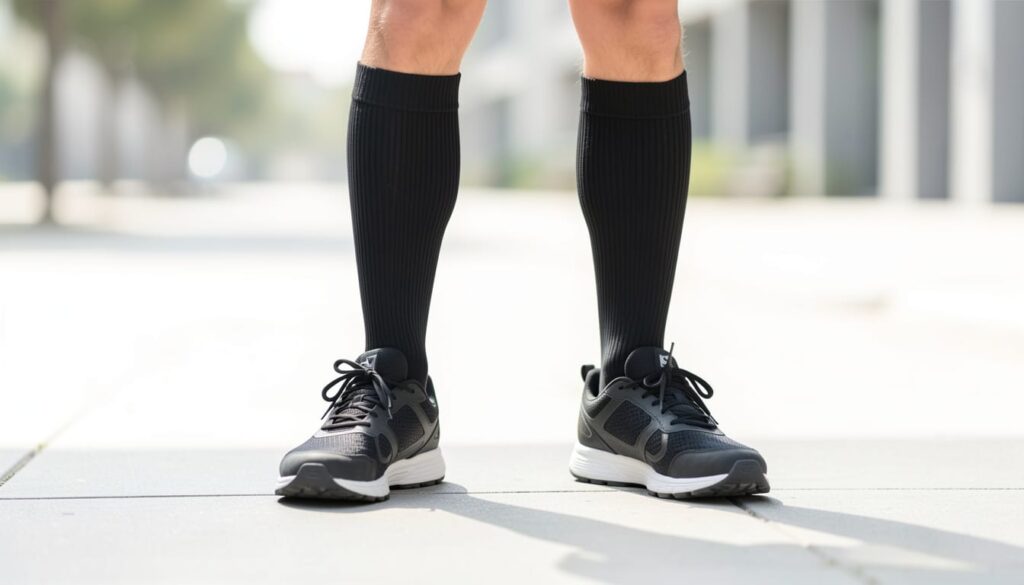
Compression socks have a bit of an image problem. For a long time they were associated exclusively with hospital stays and elderly relatives — thick, beige, deeply unglamorous. The reality in 2026 is rather different. They’re worn by long-haul travellers, nurses, teachers, runners, and anyone who spends a significant chunk of their day on their feet.
They’re also genuinely useful — when you know what you’re buying and why.
How Compression Socks Work
Compression socks apply gentle, graduated pressure to the foot and lower leg — tighter at the ankle, gradually easing off as they go up. This graduated squeeze helps the veins push blood back up towards the heart more efficiently, reducing the pooling of fluid in the lower legs and feet that causes swelling, aching, and heaviness.
The compression level is measured in mmHg (millimetres of mercury):
- 8–15 mmHg — very light, suitable for everyday comfort and mild fatigue
- 15–20 mmHg — mild compression, good for travel, prolonged standing, and mild swelling
- 20–30 mmHg — moderate compression, often recommended for varicose veins, more significant swelling, or medical use
- 30 mmHg+ — medical-grade, usually prescribed rather than bought over the counter
For most everyday purposes — foot pain, tired legs, travel — the 15–20 mmHg range is where to start.
Who Are Compression Socks For?
Foot Pain and Tired, Aching Legs
If your feet ache at the end of a long day, compression socks can make a noticeable difference. They’re particularly useful alongside other interventions — good insoles, supportive footwear — rather than as a standalone fix. Read our guide to arch support insoles.
For conditions like plantar fasciitis, compression socks won’t treat the underlying problem, but the gentle support around the arch and heel can reduce the discomfort of being on your feet for extended periods. Read our guide to plantar fasciitis exercises.
Standing All Day
Teachers, nurses, retail workers, hairdressers, chefs — anyone who spends eight hours upright knows the particular exhaustion that settles into the feet and lower legs by mid-afternoon. Compression socks worn during a long shift help maintain circulation and reduce the fluid build-up that causes that heavy, swollen feeling by the end of the day.
Travel
Long-haul flights are probably the most widely known use case for compression socks. Sitting still for hours at altitude, in a pressurised cabin, with limited room to move — it’s not a great combination for lower leg circulation. Mild to moderate compression (15–20 mmHg) during the flight reduces swelling and lowers the risk of deep vein thrombosis (DVT), particularly on flights over four hours.
The same logic applies to long car or train journeys where you’re sitting for extended periods without being able to move around much.
Diabetes and Circulation
My father-in-law has Type 2 diabetes, and foot and leg circulation is something our family has become more aware of over the years. Poor circulation is a significant concern with diabetes — it affects healing, sensation, and the risk of complications from seemingly minor injuries.
Compression socks can support circulation in people with diabetes, but this is an area where it’s genuinely important to get the right product and the right compression level. Too much compression in someone with arterial circulation problems can do more harm than good. If diabetes is a factor, please speak to a podiatrist or GP before choosing compression hosiery — don’t just pick something off the shelf. Read our guide to diabetic foot care.
What to Look for When Buying
Compression level — for general use, 15–20 mmHg is the starting point. If you have a specific medical condition, get guidance from a professional first.
Length — knee-high is the most common and practical for most purposes. Thigh-high stockings are available for more significant circulatory needs but are less commonly needed for everyday foot and leg fatigue.
Material — look for moisture-wicking fabrics, particularly if you’re wearing them during activity or long shifts. Graduated compression in a breathable fabric is noticeably more comfortable than cheaper options.
Sizing — compression socks need to fit properly to work. Measure your ankle and calf circumference rather than just going by shoe size. An ill-fitting pair can bunch up and actually restrict circulation rather than support it.
When to See a Podiatrist
If you have persistent swelling, significant varicose veins, a history of DVT, diabetes, or any known circulation condition, it’s worth getting proper advice before self-selecting compression hosiery. A podiatrist or vascular specialist can assess your circulation, recommend the right compression level, and ensure you’re not inadvertently making things worse.
Our directory lists registered podiatrists across the UK if you need a starting point. Find a podiatrist near you.
This page contains affiliate links. If you buy through these links, I may earn a small commission — at no extra cost to you. It’s what keeps this site free to use.
The information on this page is for general guidance only and does not constitute medical advice. If you are unsure about your symptoms or whether compression hosiery is suitable for you, please consult a qualified podiatrist or GP.