What Is Plantar Fasciitis?
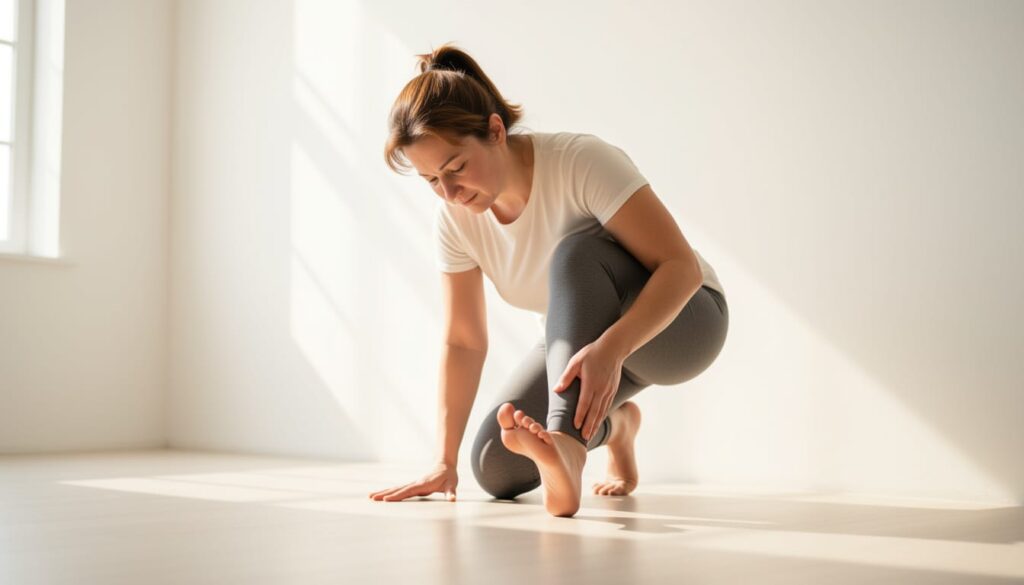
The plantar fascia is a thick band of tissue that runs along the sole of your foot, connecting your heel bone to your toes. When it becomes inflamed — through overuse, poor footwear, high arches, or just the general wear and tear of being on your feet a lot — the result is plantar fasciitis.
The defining symptom is that sharp, stabbing heel pain first thing in the morning. Those first few steps out of bed are often the worst of the day — the fascia tightens overnight, and putting weight on it suddenly is what causes that familiar wince. It tends to ease off after a few minutes of moving around, which is why a lot of people underestimate it (“it’s fine once I get going”) and leave it longer than they should.
I’ve had my own low-level battles with it over the years — high arches don’t help — so I have a certain sympathy for anyone currently hobbling to the bathroom at 6am. The good news is that for most people, the right exercises and a bit of patience make a significant difference without ever needing clinical treatment.
Why Exercises Actually Work
Plantar fasciitis responds well to stretching because the root of the problem is usually tightness — in the plantar fascia itself, in the calf muscles, and in the Achilles tendon, all of which are connected. When these tissues are tight, they pull on the heel with every step. Stretching them consistently reduces that tension, and reduced tension means less pain.
The other thing exercises do is strengthen the intrinsic muscles of the foot — the small muscles that support the arch from underneath. Strengthening those takes some load off the fascia itself.
Neither of these things happens quickly. Two or three days of stretching won’t shift plantar fasciitis. Two or three months of consistent daily stretching often does.
The Exercises
These are the ones that come up most consistently in podiatric practice — simple, no equipment needed, and easy to build into a daily routine.
1. The Seated Calf Stretch
Why it helps: The calf muscle and Achilles tendon attach directly to the heel. When they’re tight, they increase the pulling force on the plantar fascia. This is one of the most effective stretches for reducing that tension.
How to do it:
- Sit on the floor or a chair with one leg extended in front of you
- Loop a towel or resistance band around the ball of your foot
- Gently pull the towel towards you, keeping your knee straight, until you feel a stretch along the back of your calf and into your heel
- Hold for 30 seconds, repeat 3 times on each foot
- Do this before you get out of bed in the morning — it makes those first steps significantly less painful
The before-you-get-out-of-bed timing is the part people skip, and it’s the most important bit. Keep a towel on your bedside table so it actually happens.
2. The Plantar Fascia Stretch
Why it helps: This one targets the fascia directly, loosening the tissue that’s causing the pain.
How to do it:
- Sit with one foot crossed over your knee
- Hold your toes and gently pull them back towards your shin until you feel a stretch along the arch and heel
- Hold for 30 seconds, repeat 3 times
- You should feel the stretch in the arch of your foot — if you don’t, pull the toes back a little further
Again, doing this before standing up in the morning is particularly effective. Two minutes, while you’re still sitting on the edge of the bed, can meaningfully change how the first hour of your day feels.
3. Calf Raises
Why it helps: Strengthens the calf and the intrinsic foot muscles, reducing the load on the plantar fascia over time.
How to do it:
- Stand facing a wall or chair back for balance
- Rise slowly onto the balls of both feet, hold for 2 seconds at the top
- Lower slowly — the downward phase is where the strengthening happens, so don’t rush it
- Start with 2 sets of 10, build to 3 sets of 15 over a few weeks
If this causes sharp pain rather than mild discomfort, ease off and stick to the stretches until things settle down. Some ache is normal; sharp pain is a signal to stop.
The Part People Often Skip — Insoles
Exercises address the symptom. Insoles address one of the most common underlying causes — inadequate arch support that puts the plantar fascia under constant strain with every step you take.
If you’re doing all the right stretches but wearing flat, unsupportive shoes for eight hours a day, you’re fighting the problem with one hand tied behind your back. The right insoles can make an enormous difference, particularly for people with high arches or flat feet. (High arches are my own particular issue, and the difference a decent insole makes to day-to-day comfort is something I notice very clearly.)
What to look for in a plantar fasciitis insole:
- Firm arch support — not soft foam, which compresses and loses its structure quickly
- Heel cup — a raised rim around the heel holds the fat pad in place and cushions impact
- Semi-rigid construction — flexible enough to be comfortable, firm enough to do its job
My picks:
Superfeet GREEN Insoles
The one I’d point most plantar fasciitis sufferers towards first. The high-profile arch support and deep heel cup are the features to look at — this is a genuinely supportive insole, not a padded one, and that distinction matters. Widely used and consistently well-reviewed by people managing plantar fasciitis specifically.
Sorbothane Double Strike Insoles
A strong option if impact absorption is the priority — particularly good for people who stand on hard floors all day or do a lot of walking on concrete. The dual-density construction is worth reading about; it handles impact differently at the heel and forefoot, which makes more sense than it sounds.
Scholl Orthotic Insoles for Heel Pain
A more accessible price point and widely available. Not quite at Superfeet’s level of support, but a solid starting point if you want to try an insole before committing to a premium option.
For a full guide to insoles across all conditions and arch types, see our arch support insoles guide.
Footwear and Socks — The Short Version
Getting your footwear right matters as much as the exercises and insoles. Flat, unsupportive shoes — ballet pumps, flip flops, worn-out trainers — undo a lot of the work you’re doing with stretching.
As a minimum, look for shoes with built-in arch support, a cushioned heel, and enough depth to accommodate an insole if needed. Brands like Vionic build genuine orthotic support into the footbed as standard, which removes the need to think about insoles separately.
Plantar fasciitis socks (also called compression socks or arch support socks) provide light arch and heel support throughout the day. They’re not a substitute for good shoes or insoles, but as an addition to your routine they can take the edge off — particularly on long days on your feet.
When Exercises and Insoles Aren’t Enough
For most people, a combination of consistent stretching, supportive insoles, and better footwear will resolve plantar fasciitis over 3–6 months. But not everyone responds to self-treatment, and it’s worth knowing when to stop waiting and get a professional opinion.
See a podiatrist if:
- You’ve been stretching consistently for 3 months and the pain isn’t improving
- The pain is getting worse rather than better, or spreading
- You’re changing the way you walk to avoid the pain — this leads to problems elsewhere
- The pain is sharp and severe rather than the dull ache that usually settles with movement
- You have diabetes or circulation problems — heel pain in these cases needs professional assessment rather than self-treatment
I saw plenty of patients at the clinic who’d been managing plantar fasciitis for years by just putting up with it. Most of them were significantly better after a handful of appointments. It’s rarely the long haul people assume it’s going to be once you’re actually getting the right treatment.
A podiatrist can assess your gait, check whether custom orthotics would help, and — if needed — refer for physiotherapy or consider treatments like shockwave therapy, which has good evidence behind it for chronic cases.
FAQ
How long does plantar fasciitis last?
With active treatment — consistent stretching, supportive footwear, good insoles — most cases improve significantly within 3–6 months. Without treatment, it can persist for years. The frustrating thing is that it tends to feel fine once you’re moving, which makes it easy to ignore until it’s quite established.
Should I rest or keep exercising with plantar fasciitis?
Both, sensibly. Complete rest doesn’t help — the fascia needs movement and gentle load to heal. But high-impact exercise (running, jumping) tends to aggravate it, particularly when it’s acute. Swimming and cycling are good alternatives that keep you active without the heel impact.
Is it okay to walk on plantar fasciitis?
Normal walking is generally fine and doesn’t make it worse. Long distances on hard surfaces, or walking in unsupportive footwear, does. Modify rather than stop — and sort out your footwear if you haven’t already.
Do insoles cure plantar fasciitis?
Not on their own — but they’re an important part of managing it. Insoles reduce the strain on the plantar fascia with every step, which means less irritation and faster recovery. Combined with stretching, they’re considerably more effective than either approach alone.
Can plantar fasciitis come back after it’s resolved?
Yes — particularly if the underlying cause (poor footwear, inadequate arch support, tight calves) isn’t addressed. Most people who’ve had it once find it’s worth maintaining a stretching routine and keeping good insoles in their regular shoes to prevent recurrence.
What is shockwave therapy for plantar fasciitis?
Extracorporeal shockwave therapy (ESWT) delivers sound waves to the affected tissue, stimulating healing in chronic cases that haven’t responded to other treatments. It’s used by podiatrists and physiotherapists and has a good evidence base for stubborn plantar fasciitis. It’s not a first-line treatment — but if you’ve been dealing with this for more than 6 months without improvement, it’s worth asking about. Find a podiatrist near you
The Bottom Line
Plantar fasciitis is one of those conditions where the self-treatment genuinely works — but only if you do it consistently and give it enough time. The stretches above take five minutes in the morning. A decent pair of insoles costs less than a single physio appointment. Between the two, most people see real improvement within a few months.
If three months of doing things properly hasn’t shifted it, stop hoping it’ll resolve on its own and get it looked at. A podiatrist will almost certainly be able to help — and you’ll wish you’d gone sooner.
Last reviewed: March 2026 | This guide is for informational purposes. It does not constitute medical advice. Always consult a qualified podiatrist for diagnosis and treatment of foot conditions.