Two Common Problems, One Page
Corns and cracked heels are among the most common foot complaints there are — the kind of thing most people deal with quietly at home rather than mentioning to anyone. They’re also the kind of thing that’s easy to manage well and surprisingly easy to manage badly.
This page covers both. They’re different conditions with different causes, but they share a common thread: consistent, correct treatment makes them manageable; neglect or the wrong approach makes them worse. And in both cases, there’s a point where home treatment stops being enough.
Part One — Corns
What Is a Corn?
A corn is a small, concentrated area of hard, thickened skin that develops in response to repeated pressure or friction — usually on the tops or sides of toes, or on the sole of the foot. The body’s way of protecting the underlying tissue is to build up a layer of hard skin, but the corn itself then becomes a source of pain, pressing into the tissue beneath it with every step.
Corns have a distinctive structure — a hard central core that points inward, which is what makes them painful. This is what distinguishes them from a general callus, which is a flatter, broader area of hard skin without that central plug.
Common causes:
- Ill-fitting footwear — shoes that are too tight, too narrow, or have seams that press against the toes
- High heels — shift weight onto the ball of the foot and toe joints
- Prominent toe joints — hammer toes or bunions create pressure points where corns commonly develop
- Walking or standing for long periods — particularly on hard surfaces
Home Treatment for Corns
Step one — remove the pressure. This is as important as any treatment product. If the cause of the corn is footwear, no amount of treatment will work long-term while you’re still wearing the shoes that caused it. Check that your shoes have enough room in the toe box and aren’t pressing on the affected area. For footwear with a proper toe box, see our wide fit shoes guide.
Step two — soften and reduce. Salicylic acid is the active ingredient in most corn treatments — it softens the hard skin and allows it to be gently filed away. It comes in medicated plasters, gels, and liquids. Used consistently and correctly, it works well for most mild to moderate corns.
Step three — protect. Corn cushions and padding protect the corn from further pressure while treatment is ongoing, and make day-to-day life considerably more comfortable.
My picks:
Scholl Corn Removal Plasters
The standard starting point for most corns. The salicylic acid concentration is well calibrated for home use, and the plaster format keeps the treatment in contact with the corn rather than spreading to surrounding skin. Read the instructions on application — the temptation is to go straight to filing, but the softening step needs time to work properly
Compeed Corn Plasters
A dual-purpose option — the hydrocolloid cushioning protects the corn from pressure while the plaster aids healing. Particularly good for corns in awkward positions where a standard medicated plaster is hard to keep in place.
Carnation Corn Caps
A reliable medicated option that’s been around long enough to have a strong track record. Worth having a look at the different formulations for different corn positions — the toe and sole versions are slightly different products.
When NOT to Use Corn Plasters
This is important. Medicated corn plasters contain salicylic acid, which breaks down skin tissue. On healthy skin surrounding the corn, this causes damage rather than treatment. People with diabetes, poor circulation, or reduced sensation in their feet should not use salicylic acid corn treatments at home — the risk of unintended skin damage is too high.
If you have diabetes and develop a corn, see a podiatrist rather than self-treating. See our diabetic foot care guide.
When to See a Podiatrist for a Corn
- If the corn is large, deeply embedded, or causing significant pain
- If it’s not responding to a proper course of home treatment
- If corns keep returning in the same place — this suggests an underlying pressure issue that products alone won’t solve
- If you have diabetes, poor circulation, or any condition affecting foot sensation
A podiatrist can remove a corn quickly and cleanly, address any underlying foot mechanics that are causing it to recur, and fit padding or custom orthotics if needed. For recurring corns, a single podiatry appointment is often more effective than years of repeat self-treatment.
Part Two — Hard Skin, Foot Files & Removers
Hard Skin Remover
Hard skin — callus — is similar to a corn but without the central core. It develops on weight-bearing areas of the foot, particularly the heel, ball, and outer edge. A moderate amount of callus is normal and protective. When it builds up excessively it becomes uncomfortable, prone to cracking, and in dry conditions can split painfully.
Regular maintenance with a good foot file or hard skin remover is the most effective approach. The key is consistency — a five-minute weekly routine prevents the build-up that makes removal much harder.
Scholl Velvet Smooth Foot File
The electric option that comes up consistently in recommended product lists. The rotating roller removes hard skin effectively without the physical effort of manual filing. The coarseness setting is worth paying attention to — start with the gentler setting on sensitive areas.
Microplane Foot File
The manual option I’d recommend for anyone who prefers to stay in control of the process. Microplane’s stainless steel filing surface is considerably more effective than a standard pumice stone and lasts far longer. Use on dry skin rather than wet — it’s more effective and gives you better feedback on how much you’re removing.
Flexitol Hard Skin Remover Gel
A chemical approach — urea-based gel that softens hard skin for easier removal. Good for areas where physical filing is difficult or where the hard skin is particularly thick. Apply, leave to absorb, then use a foot file. The combination is considerably more effective than either approach alone.
Part Three — Cracked Heels
What Causes Cracked Heels?
Cracked heels develop when the skin around the heel becomes dry, thickened, and loses its elasticity. The pressure of weight-bearing causes it to split — in mild cases, a cosmetic nuisance; in more severe cases, deep fissures that are painful and can become infected.
Common causes:
- Dry skin — the heel has fewer oil glands than other parts of the body, making it prone to dryness
- Open-backed footwear — flip flops and backless sandals allow the heel fat pad to expand sideways under weight, increasing the pressure that causes cracking
- Prolonged standing — especially on hard floors
- Dry conditions — central heating in winter strips moisture from skin
- Medical conditions — thyroid disorders, psoriasis, and diabetes all increase susceptibility to cracked heels
Home Treatment for Cracked Heels
The approach is straightforward: soften, remove excess hard skin, and moisturise consistently.
Step one — soak. A 10–15 minute warm foot soak softens the hard skin around the heel, making subsequent filing much more effective.
Step two — file. Remove the softened hard skin with a foot file, working gently. Don’t try to remove everything in one session — gradually reducing build-up over several weeks is better than aggressive removal.
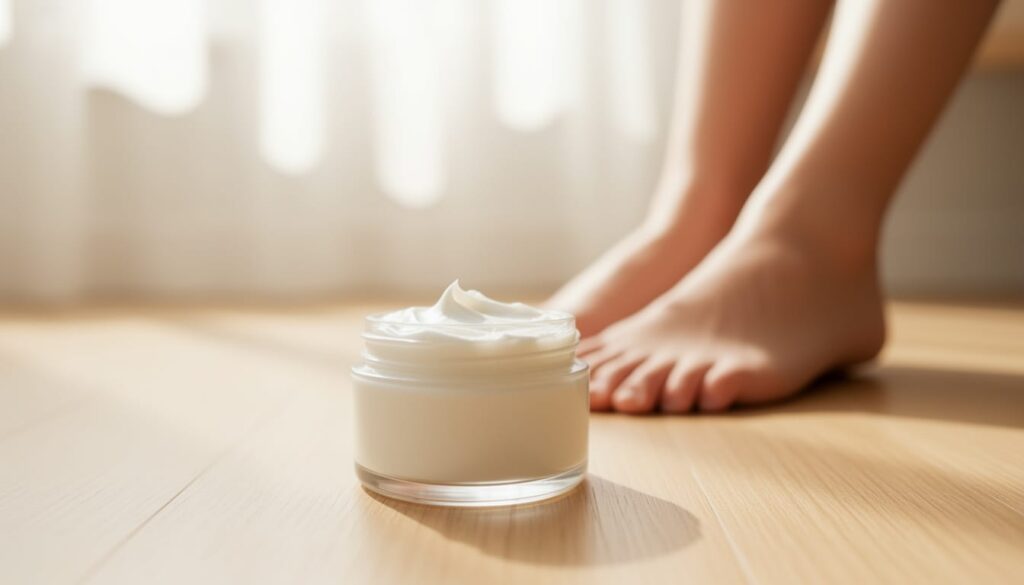
Step three — moisturise. The most important step, and the one most people underdo. A heel-specific cream with a high urea content (20–25% is the clinical sweet spot) penetrates the thickened skin rather than sitting on top of it.
Step four — seal. Wearing cotton socks after applying cream at night dramatically improves absorption. It’s the least glamorous skincare routine imaginable, but it works.
My picks:
Flexitol Heel Balm
The one I’d reach for first. The 25% urea concentration is the feature that makes it more effective than standard body lotions — urea is a keratolytic agent that breaks down the bonds holding dry, dead skin cells together, allowing the cream to penetrate properly. Apply generously twice daily and you’ll notice a difference within a week.
CCS Foot Care Cream
A strong alternative with a loyal following — widely recommended in podiatric practice and particularly effective for maintaining soft heels once you’ve got the hard skin under control. The larger tube sizes are worth buying; this is a product you’ll use consistently.
Gehwol Fusskraft Heel Cream
The premium option. Gehwol is a German brand with a very strong reputation in professional foot care — their products are used in podiatry clinics and have a significantly higher active ingredient concentration than most pharmacy brands. Worth the price if you’re dealing with persistently dry or cracked heels that haven’t responded to standard creams.
When to See a Podiatrist for Cracked Heels
Mild to moderate cracked heels respond well to consistent home treatment. See a podiatrist if:
- Fissures are deep, bleeding, or showing signs of infection
- Heels aren’t improving after 4–6 weeks of consistent home treatment
- Cracking is associated with a skin condition like psoriasis or eczema
- You have diabetes — cracked heels in diabetic feet need professional assessment rather than home management (see our diabetic foot care guide)
A podiatrist can remove callus safely and thoroughly, treat deep fissures properly, and identify any underlying cause that’s making the problem persistent.
FAQ
What’s the difference between a corn and a callus?
Both are areas of thickened hard skin, but a corn has a hard central core that points inward — this is what makes it painful. Callus is flatter and more diffuse, and while it can be uncomfortable when very thick, it doesn’t have the same concentrated pressure point that makes corns painful.
Can I cut a corn off myself?
You can file softened corn tissue away after treatment with salicylic acid, but cutting at a corn with scissors or a blade is not recommended — it risks cutting healthy skin, causing bleeding and infection. Medicated plasters and careful filing is the safe home approach; a podiatrist can remove corns cleanly and quickly if that doesn’t work.
How long does corn removal take?
With medicated plasters used consistently, most mild corns soften and reduce within 2–4 weeks. Larger or more established corns take longer. If there’s no meaningful improvement after 4–6 weeks, see a podiatrist.
Why do my cracked heels keep coming back?
Usually because the underlying cause — open-backed footwear, a tendency to dry skin, or a medical condition — is still present. Managing cracked heels is an ongoing routine rather than a one-off fix. Consistent moisturising (daily, not when you remember) is what prevents recurrence.
Is urea cream safe to use on feet?
Yes — urea-based creams are the clinical standard for dry, thickened foot skin. Concentrations of 10–25% are used in podiatric practice and are safe for regular use. Avoid applying between the toes where the skin is thinner.
Are foot files safe to use at home?
Yes, used correctly. File after soaking (softer skin is easier to work with), use gentle pressure, and stop before the skin becomes red or tender. The mistake most people make is over-filing in one session — little and often is more effective and safer than aggressive removal.
The Bottom Line
Corns, hard skin, and cracked heels are manageable conditions that respond well to the right products and a consistent routine. The right foot file, a urea-based heel cream used daily, and medicated corn plasters used correctly will keep most people comfortable with minimal effort.
Where people go wrong is either ignoring the problem until it’s well established, or treating it inconsistently and wondering why it keeps coming back. Five minutes a week, the right products, and good footwear is genuinely all most people need.
If anything isn’t responding after a proper course of home treatment — or if you have diabetes and any of these conditions — stop self-treating and see a podiatrist instead.
Last reviewed: March 2026 | This guide is for informational purposes. It does not constitute medical advice. Always consult a qualified podiatrist for diagnosis and treatment of foot conditions.